North American Auto Repair & Cleaning Industry Air Hose Reel: Air Leakage, Pressure Loss & Short Lifespan – Pain Points, Causes & Technical Solutions
The Challenge
As an operator in North America’s auto repair & cleaning industry, our air hose reel often has air leakage, serious pressure loss, frequent retraction jams, and short service life under heavy daily use, affecting work efficiency and increasing maintenance costs.
Our Solution
Upgrade high-pressure sealed components, adopt wear-resistant and corrosion-resistant heavy-duty materials, optimize retraction and pressure stabilization mechanisms, and add anti-debris and maintenance-friendly designs to solve core usage issues and improve durability.
Full Case Analysis
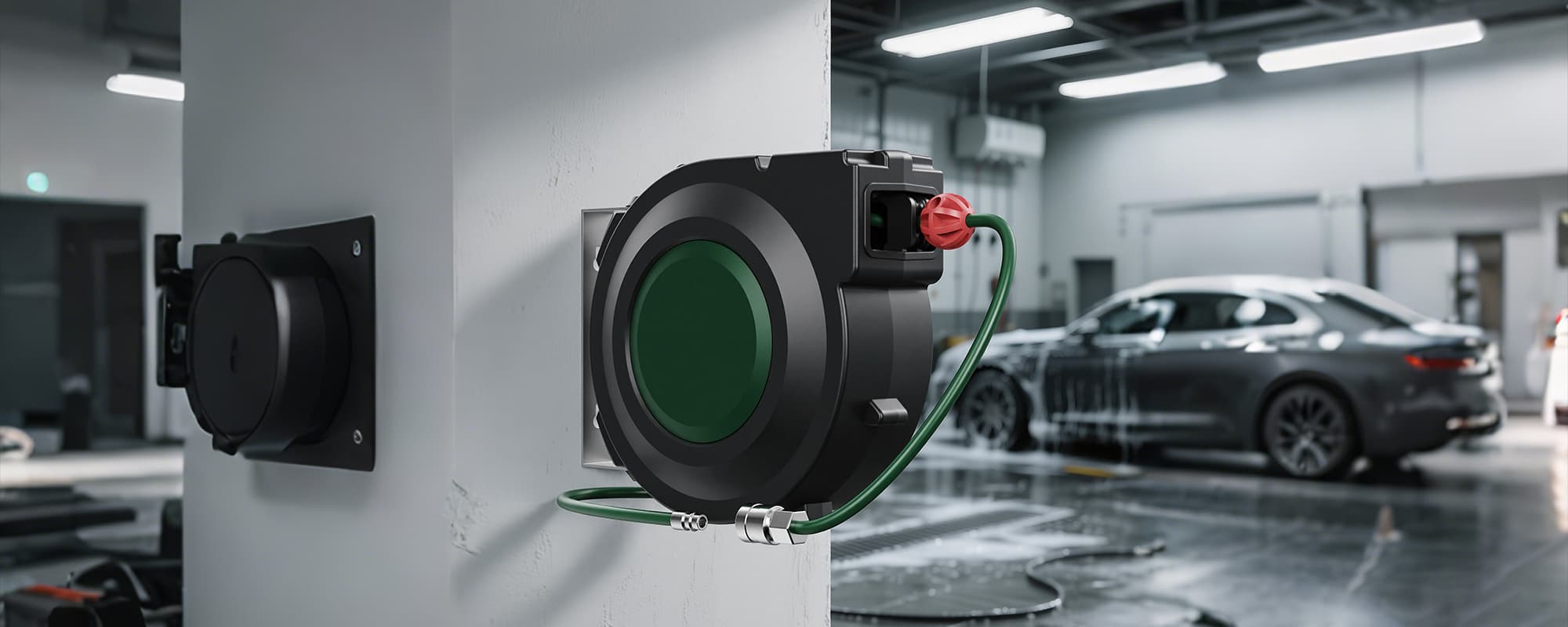
In the North American auto repair and cleaning industry, air hose reels are essential core equipment, widely used in auto body cleaning, engine maintenance, tire inflation, and powering pneumatic tools (such as impact wrenches and spray guns). Unlike household use, auto repair and cleaning shops require air hose reels to withstand heavy daily use—long working hours, high-frequency retraction, exposure to automotive oils, cleaning agents, and extreme temperature changes. However, frequent usage issues such as air leakage, pressure loss, retraction jams, and short service life have become persistent pain points for industry operators, seriously affecting work efficiency, increasing operational costs, and even delaying repair and cleaning tasks. This article focuses on the key usage problems of air hose reels in the North American auto repair and cleaning industry, analyzes the root causes from the perspective of shop operators and technicians, and proposes targeted technical solutions to solve these pain points, enhance equipment reliability, and improve industry work efficiency.
Consumer (Industry Operator) Reviews: The Plight of Air Hose Reel Usage in Auto Repair & Cleaning Shops
Many operators and technicians in North American auto repair and cleaning shops have shared their frustrations with air hose reel usage on industry forums and e-commerce platforms (such as Amazon, Tractor Supply Co.). A technician from an auto repair shop in California said, “Our shop uses air hose reels 8-10 hours a day; after only 8 months, the swivel joint starts leaking air, and the pressure drops significantly—our impact wrench can’t work normally, forcing us to stop work for repairs, which delays customer orders.” An owner of a car cleaning shop in Ontario, Canada, complained, “The hose on our reel cracks easily after being exposed to cleaning agents and oil, and the retraction mechanism jams frequently; we have to replace the reel every year, which adds a lot to our operational costs.” Another technician from Texas mentioned, “The reel’s locking mechanism often fails, causing the hose to retract suddenly during use, which is not only inefficient but also poses a safety hazard for our staff.” Similar reviews are widespread in the industry: operators report that air leakage (mostly at swivel joints and couplings), pressure loss, retraction jams, and short service life (less than 1 year under heavy use) are the most common issues, and many low-quality reels cannot withstand the industry’s high-intensity usage demands, becoming a bottleneck for work efficiency.
Root Causes of Air Hose Reel Usage Issues in North American Auto Repair & Cleaning Industry
To solve the usage problems of air hose reels in the auto repair and cleaning industry, it is first necessary to clarify their core causes, which are closely related to the industry’s high-intensity usage scenarios, harsh working environment, and product design defects:
- Insufficient Sealing Performance Under High Pressure: Auto repair and cleaning shops often use high-pressure air (250-300 PSI) to power pneumatic tools and clean vehicles. Most ordinary air hose reels use low-grade seals and simple swivel joint structures, which are prone to wear, deformation, and aging under long-term high-pressure conditions, leading to air leakage at joints, swivel shafts, and hose interfaces. Additionally, the frequent disconnection and connection of quick-connect couplings further exacerbate seal damage, resulting in more serious air leakage and pressure loss.
- Inadequate Wear and Corrosion Resistance: The working environment of auto repair and cleaning shops is harsh—reels are often exposed to automotive oils, cleaning agents, grease, and dust, while also enduring extreme temperature changes (from -20°F in winter to 120°F in summer). Ordinary reel housings, internal components (ratchet, spring, swivel shaft), and hoses lack effective anti-corrosion and anti-wear treatment, leading to rust, corrosion, and wear of components, which not only causes retraction jams but also shortens the overall service life of the reel. Low-quality hoses are prone to cracking and collapsing after long-term contact with chemicals and frequent bending, further worsening usage issues.
- Unstable Retraction Mechanism Under High-Intensity Use: Auto repair and cleaning shop staff need to retract and extend the hose dozens of times a day, which places high demands on the reel’s retraction mechanism. Ordinary spring-driven reels use low-fatigue springs that easily lose tension or break after long-term high-frequency use, leading to retraction jams, sluggish retraction, or sudden retraction. Additionally, the ratchet and latch mechanism is prone to wear and debris clogging, resulting in failure to lock the hose at the desired length, affecting work efficiency and safety.
- Pressure Loss Caused by Unreasonable Design: The long hose length (50-75ft) used in auto repair and cleaning shops, combined with narrow internal hose diameters and rough inner walls, easily causes significant pressure loss during air transmission—this leads to insufficient power of pneumatic tools, affecting repair and cleaning efficiency. Moreover, the lack of a pressure stabilization mechanism in many reels exacerbates pressure fluctuations, further reducing tool performance.
- Lack of Industry-Oriented Maintenance Design: Most air hose reels are designed for household use, with sealed structures that are difficult to disassemble and maintain. In auto repair and cleaning shops, when small issues (such as minor air leakage or component wear) occur, staff cannot quickly replace seals or worn parts, forcing them to stop work for lengthy repairs or replace the entire reel, which increases operational costs and reduces work efficiency.
Technical Solutions to Solve Air Hose Reel Usage Issues in Auto Repair & Cleaning Industry
Targeting the above root causes and combining the high-intensity, harsh-environment usage characteristics of the North American auto repair and cleaning industry, the following technical optimizations are proposed to solve core usage issues, improve equipment durability and reliability, and enhance work efficiency:
- Upgrade High-Pressure Sealed Components: Replace ordinary rubber seals with high-pressure and chemical-resistant fluorine rubber O-rings (capable of withstanding 0-400 PSI pressure and -40°F to 250°F temperature), and adopt a triple-seal design at swivel joints and couplings to eliminate air leakage. Use precision-machined brass swivel joints with wear-resistant coatings to improve rotation smoothness and reduce seal wear under high-pressure and high-frequency use. Pre-apply high-temperature and oil-resistant thread sealant to quick-connect couplings to ensure tight connection and avoid pressure loss caused by loose installation.
- Adopt Heavy-Duty Wear and Corrosion Resistant Materials: Use thickened cold-rolled steel for the reel housing, and apply a double-layer electrostatic powder coating (8 times thicker than standard paint) to form an impermeable barrier against oils, cleaning agents, and moisture, achieving over 2,000 hours of salt spray corrosion resistance. Adopt 304 stainless steel for internal components (ratchet, spring, swivel shaft) to prevent rust and wear, and use high-fatigue manganese steel springs to withstand high-frequency retraction (over 100,000 times) without losing tension. Equip the reel with a chemical-resistant hybrid hose (nitrile rubber-lined, steel-reinforced) that is resistant to oils, cleaning agents, and kinking, extending the hose’s service life to 3-5 years under heavy use.
- Optimize Retraction and Pressure Stabilization Mechanism: Upgrade the retraction mechanism with a dual-spring design and a centrifugal tension adjustment system to ensure smooth and stable retraction, avoiding jams or sudden retraction. Redesign the ratchet and latch mechanism with a self-cleaning gear structure to prevent debris clogging, and use wear-resistant stainless steel for the latch pawl to enhance locking reliability. Add a pressure stabilization valve to the reel’s inlet, maintaining stable air pressure (±5 PSI) during transmission, reducing pressure loss, and ensuring the normal operation of pneumatic tools even with long hose lengths.
- Improve Structural Design for Industry Scenarios: Design a detachable full-enclosed protective cover to prevent oils, cleaning agents, dust, and debris from entering the internal mechanism, reducing component wear and failure risks. Optimize the hose guide with a dual-roller structure (polyurethane material) to avoid hose wear caused by friction during high-frequency retraction, and design the guide arm to be adjustable, adapting to different working positions (vehicle undercarriage, engine compartment) in auto repair and cleaning shops. Strengthen the reel’s mounting bracket to ensure stability under heavy use and prevent structural deformation.
- Add Industry-Oriented Maintenance Features: Design a quick-detach side cover for the reel, allowing shop staff to disassemble and maintain components without professional tools, reducing downtime. Provide a dedicated maintenance kit (including spare seals, O-rings, and lubricants) with the product, enabling quick repair of minor air leakage or component wear. Mark clear maintenance indicators on the reel housing, reminding staff to inspect and maintain key parts (such as seals, springs, and couplings) regularly, extending the overall service life of the reel. Additionally, add a manual override function for emergency use, ensuring that the hose can be retracted manually if the spring mechanism fails, avoiding work interruptions.
By integrating these technical solutions, air hose reels can effectively solve the core usage issues (air leakage, pressure loss, retraction jams, short service life) faced by the North American auto repair and cleaning industry. The optimized design is tailored to the industry’s high-intensity, harsh-environment usage needs, enhancing equipment reliability, durability, and usability, while reducing maintenance costs and improving work efficiency. These improvements not only address the pain points of shop operators and technicians but also enhance product competitiveness in the North American auto repair and cleaning equipment market, which values efficiency, durability, and low maintenance costs.