For importers, distributors and private-label brands, choosing a garden hose reel is only the first step.
The next question is often:
What can actually be customized for an OEM hose reel project?
Customization does not simply mean printing a different logo on an existing product.
Depending on the product platform and project requirements, an OEM garden hose reel program may involve decisions about hose length, hose diameter, connector standard, housing color, installation style, packaging and market positioning.
Each choice can affect product weight, reel size, water flow, retraction performance, packaging dimensions and the final customer experience.
This guide explains the major areas buyers should consider when planning an OEM retractable garden hose reel.
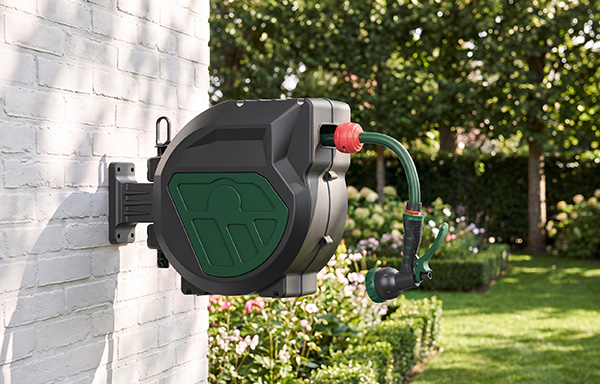
Quick Answer: What Can Be Customized on an OEM Garden Hose Reel?
The available options depend on the product platform and order requirements, but buyers commonly need to define several specification areas.
| Customization Area | Examples | Why It Matters |
|---|---|---|
| Hose Length | 15m, 18m, 20m, 25m, 30m, 40m, 50m and other available configurations | Determines coverage, product size and target application |
| Hose Diameter | 1/2", 5/8" | Affects flow, weight and reel structure |
| Connector Standard | GHT, BSP and compatible connection systems | Must match the target market |
| Housing Color | Standard or custom color options depending on model | Supports brand and retail positioning |
| Installation | Wall-mounted or ground-stake configurations | Changes how customers install and use the reel |
| Functional Specification | Locking, rewind and slow-retraction requirements | Influences user experience and engineering validation |
| Packaging | Retail carton and project-specific packaging requirements | Affects branding, protection and logistics |
| Private Label | Branding requirements to be confirmed for each project | Supports distributor and retailer brand programs |
The most important rule is to define the target market and application first.
1. Hose Length: Start With the Customer's Coverage Area
Hose length is one of the first specifications buyers normally select.
However, a longer hose is not automatically a better hose reel.
Different lengths address different applications:
- shorter reels for patios and compact gardens;
- mid-length reels for mainstream residential watering;
- longer reels for larger properties;
- extended-reach configurations for landscaping or demanding applications.
The hose length also influences:
- drum capacity;
- housing dimensions;
- product weight;
- spring load;
- packaging dimensions;
- freight efficiency.
For an OEM project, buyers should therefore avoid choosing length only from a competitor's specification sheet.
The better starting point is the typical distance between the customer's water source and working area.
Property Size → Water Source → Required Reach → Hose Length → Reel Size → Packaging
2. Hose Diameter: 1/2" or 5/8"?
Hose diameter affects much more than the number printed on a specification sheet.
It can influence:
- water-flow potential;
- hose weight;
- handling;
- drum capacity;
- housing size;
- rewind-system requirements.
A 1/2" hose can be attractive for compact residential products where handling and overall reel size are important.
A 5/8" hose can be suitable where greater water-flow potential is an important part of the product position.
However, diameter should always be evaluated together with hose length.
3. Connector Standard: Match the Product to the Market
Connector selection is one of the most important market-specific specifications in an OEM hose reel project.
A hose reel can have the correct length, diameter and housing while still creating problems if the fittings do not match the customer's local system.
For example, buyers may need to evaluate:
- GHT configurations for North American applications;
- BSP configurations for European-market products;
- quick-connect compatibility;
- connector material;
- inlet and outlet configuration;
- included accessories.
The connector should therefore be selected early in product development, not added as a final packaging decision.
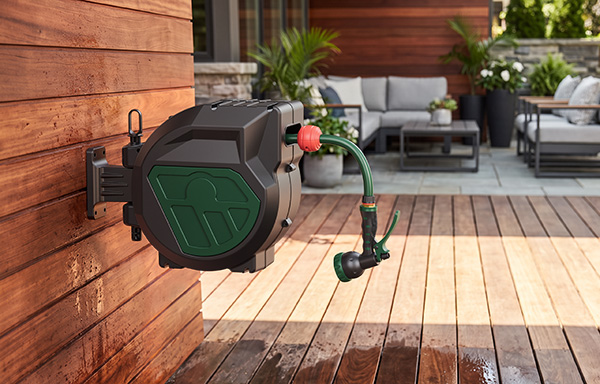
4. Housing Color: Turn a Standard Platform Into a Branded Product
Housing color is one of the most visible customization areas.
It can help a retailer or private-label brand:
- match an existing product range;
- create stronger shelf recognition;
- differentiate premium and mainstream SKUs;
- support brand consistency across garden products.
Some SUNWELL hose reel configurations list standard colors as well as custom color options.
For a custom-color project, buyers should confirm:
- the required color reference;
- which housing components will change color;
- minimum order requirements;
- sample approval method;
- whether the color affects production lead time.
Color approval should ideally happen before mass production rather than relying on a screen image or verbal description.
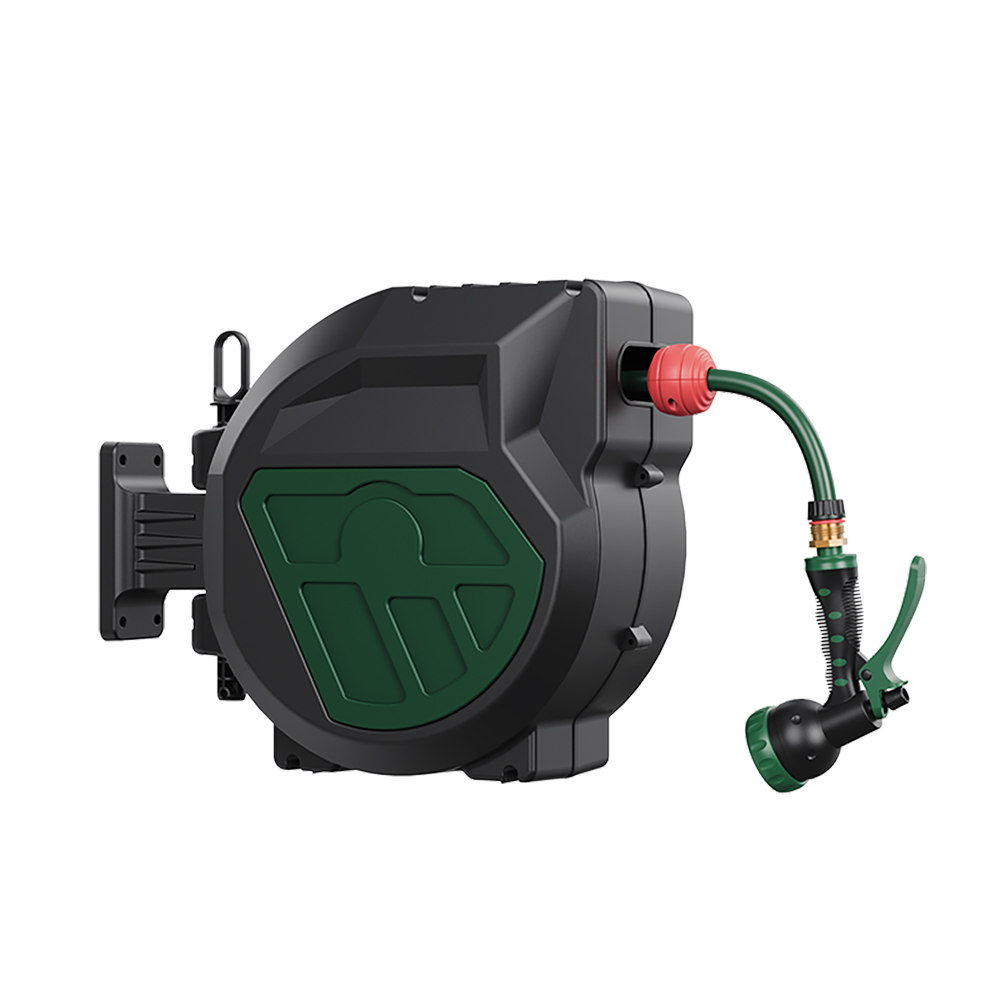
5. Installation Style: Wall-Mounted or Ground-Stake?
OEM buyers should also decide how the end customer will install the reel.
Wall-mounted designs work well where customers want:
- permanent hose storage;
- efficient use of floor space;
- easy everyday access;
- organized residential installation.
Ground-stake configurations can be useful where:
- there is no suitable wall;
- the reel needs to be positioned closer to the lawn;
- customers want greater installation flexibility.
This choice affects more than the bracket.
The reel's structural load, stability, packaging and intended working position also need to be considered.
Property Layout → Mounting Surface → Coverage Requirement → Wall Mount / Ground Stake
6. Rewind, Locking and Slow-Retraction Requirements
Automatic rewind is one of the key functions of a retractable hose reel.
For an OEM project, buyers should define the required user experience, not simply request an “automatic hose reel.”
Important performance points include:
- smooth hose extension;
- reliable locking at working length;
- predictable lock release;
- complete retraction;
- controlled rewind speed;
- stable performance over repeated cycles.
These features should be matched to the final hose length and diameter.
Changing the hose specification can change the mechanical load placed on the reel.
This is why buyers should confirm that the selected mechanism has been evaluated with the final OEM configuration.
7. Packaging: More Than a Box
Packaging is especially important for retail and private-label programs.
A hose reel is relatively large compared with many garden accessories, so packaging affects both presentation and logistics.
Buyers should define:
- retail or distribution packaging requirements;
- carton dimensions;
- brand artwork requirements;
- product information;
- instruction requirements;
- barcode or label requirements;
- shipping protection;
- pallet and container efficiency.
Standard product pages may list a color-box packaging method, but project-specific private-label requirements should be confirmed before quotation.
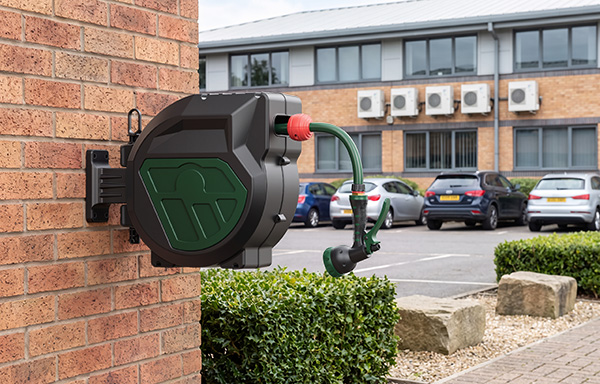
8. Private Label and Branding Requirements
Private-label buyers usually want the hose reel to fit into an existing brand system rather than appear as an isolated product.
Before requesting a quotation, prepare the branding requirements that may need to be discussed with the manufacturer.
These can include:
- brand identity requirements;
- housing color;
- product labeling;
- retail carton artwork;
- manual or instruction requirements;
- barcode and market information;
- SKU naming.
Not every branding option is available on every product platform, so these items should be confirmed during the OEM discussion and sample stage.
What Is Usually Easier to Customize?
Not every customization request has the same level of complexity.
| Customization Type | Typical Complexity | What Buyers Should Confirm |
|---|---|---|
| Existing Hose Length | Lower | Available product platform and reel capacity |
| Existing Hose Diameter | Lower to Medium | Housing and rewind-system compatibility |
| Market Connector | Lower to Medium | GHT, BSP and accessory compatibility |
| Housing Color | Medium | MOQ, color sample and lead time |
| Packaging Artwork | Medium | Artwork, language, labels and carton requirements |
| Different Installation System | Medium to High | Existing platform availability and structural requirements |
| New Housing / New Mechanism | High | Engineering feasibility, tooling, testing, MOQ and development time |
Buyers should therefore separate configuration customization from new product development.
Configuration Customization vs New Product Development
Configuration Customization
This normally starts with an existing product platform.
The project may involve selecting or adjusting available options such as:
- hose length;
- hose diameter;
- connector type;
- housing color;
- packaging;
- market-specific accessories.
Because the basic reel structure already exists, this approach can often be more practical for distributors launching a new SKU.
New Product Development
A request for a completely different housing, drum, mounting system or mechanical structure is a different type of project.
It may require:
- engineering evaluation;
- new tooling;
- prototype development;
- mechanism validation;
- pressure testing;
- cycle testing;
- longer development lead time;
- different MOQ requirements.
Buyers should clearly tell the manufacturer whether they want to customize an existing platform or develop a new product.
How Customization Can Affect MOQ
MOQ is not always the same for every OEM project.
A standard configuration may have a different minimum order requirement from a product that requires:
- a special housing color;
- custom packaging;
- special components;
- new accessories;
- new tooling;
- multiple customized SKUs.
Buyers should therefore avoid asking only:
“What is your MOQ?”
A better question is:
“What is the MOQ for this exact customized specification?”
How Customization Can Affect Lead Time
Customization can also change the project timeline.
A useful OEM schedule may include:
- Specification confirmation
- Quotation
- Sample preparation
- Sample testing
- Color or packaging approval
- Mass production
- Pre-shipment inspection
- Shipping
New colors, packaging development or structural changes may require additional approval time.
Buyers should build this time into their seasonal launch plan.
What Should Buyers Confirm During Sample Approval?
An OEM sample should not be evaluated only by appearance.
Buyers should check whether the sample matches the agreed specification.
A practical approval checklist includes:
- correct hose length;
- correct hose diameter;
- housing color;
- connector standard;
- installation hardware;
- extension and retraction performance;
- locking function;
- water leakage;
- included accessories;
- labels;
- packaging;
- instructions.
What Information Should You Send for an OEM Hose Reel Quotation?
A complete inquiry helps the manufacturer understand the project faster and reduces repeated clarification.
Include:
- target country or market;
- target customer;
- main application;
- required hose length;
- hose diameter;
- connector standard;
- installation type;
- required color;
- estimated order quantity;
- branding requirements;
- packaging requirements;
- expected delivery date.
Market → Application → Hose Length → Diameter → Connector → Installation → Color → Quantity → Branding → Packaging → Delivery
OEM Garden Hose Reel Customization Checklist
| Item | Buyer Decision |
|---|---|
| Target Market | US, Europe or other region |
| Application | Residential, patio, large garden or landscaping |
| Hose Length | Select required working reach |
| Hose Diameter | 1/2", 5/8" or available specification |
| Connector | GHT, BSP or market-specific configuration |
| Installation | Wall-mounted, ground-stake or available platform |
| Housing Color | Standard or project-specific custom color |
| Function | Confirm locking, rewind and slow-retraction requirements |
| Branding | Confirm private-label requirements with manufacturer |
| Packaging | Retail / distribution requirements |
| Quantity | Estimated first order and forecast |
| Delivery | Required shipment or launch date |
Common OEM Mistakes to Avoid
Many sourcing problems begin before production because the specification was not clearly defined.
Common mistakes include:
- choosing hose length without measuring the target application;
- choosing diameter only because “larger is better”;
- forgetting to confirm GHT or BSP connectors;
- requesting a custom color without a clear reference;
- assuming every branding option is available on every product;
- approving appearance but not testing rewind and locking;
- confirming packaging after mass production has already started;
- asking for price before defining the final specification.
The more complete the specification is before quotation, the easier it becomes to compare suppliers accurately.
Frequently Asked Questions
What can be customized on an OEM garden hose reel?
Depending on the product platform and project requirements, buyers may discuss hose length, hose diameter, connector standard, housing color, installation style, packaging and private-label requirements with the manufacturer.
Can the hose length be customized?
Hose reel product ranges can support different lengths, but the final hose length must match drum capacity, housing size, rewind force and the intended application.
Can buyers choose between GHT and BSP connectors?
Connector selection should match the target market. GHT configurations are commonly used for North American products, while BSP configurations are available for European-market hose reels.
Can the housing color be customized?
Some SUNWELL hose reel models list standard and custom color options. The available color range, MOQ and production requirements should be confirmed for each project.
Can garden hose reels be private labeled?
Private-label projects can be discussed with the manufacturer. Buyers should provide branding, packaging and market requirements so the available customization scope can be confirmed.
Does customization affect MOQ?
It can. Standard products and customized colors, packaging or specifications may have different order requirements. Buyers should confirm MOQ for the final configuration before sample approval.
Does customization affect lead time?
Yes. Color approval, packaging development, special components or structural changes can add time to sampling and production.
What information should I send for an OEM hose reel quotation?
Provide the target market, hose length, hose diameter, installation type, connector standard, quantity, color, branding, packaging and expected delivery schedule.
Build the OEM Specification Around the Market
The best OEM garden hose reel project does not begin with:
“Can you put our logo on this product?”
It begins with:
“What specification is right for our target customer and market?”
Once that is clear, hose length, diameter, fittings, color, installation method and packaging can be selected around the product's real application.
This creates a more coherent SKU and gives both the buyer and manufacturer a clearer specification to approve before mass production.
Planning an OEM or Private-Label Hose Reel Project?
SUNWELL HOSE REELS supports garden hose reel projects for distributors, wholesalers, retailers and private-label customers serving North American, European and other international markets.
Send us your target market, hose length, hose diameter, connector standard, installation type, order quantity, color, branding and packaging requirements so we can discuss a suitable configuration for your project.
Request an OEM Quote