A retractable garden hose reel may look simple from the outside, but several systems need to work together before the product reaches the end customer.
The hose needs to carry water at the required working conditions. The internal water path needs to remain sealed. The rewind mechanism needs to pull the hose back smoothly. The locking system needs to hold the hose at practical working lengths. The mounting structure needs to remain stable during use.
For an OEM or private-label buyer, quality therefore cannot be evaluated only by looking at the housing.
Before mass production, buyers should confirm which checks apply to the final garden hose reel specification and how the approved sample will be used as a reference.
This guide explains the main areas buyers should review when evaluating garden hose reel testing and quality control.
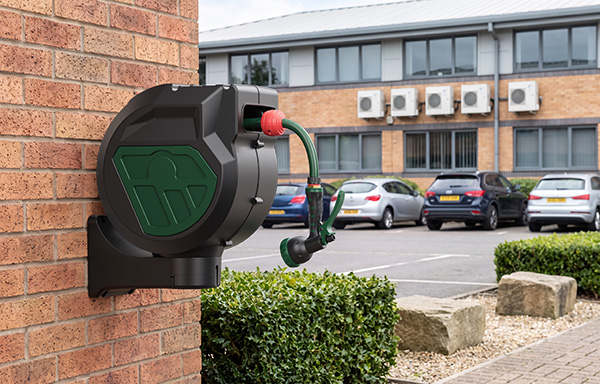
Quick Answer: What Should Be Checked Before Hose Reel Mass Production?
| Quality Area | What Buyers Should Confirm |
|---|---|
| Specification | Model, hose length, hose diameter, connector standard, color and accessories match the approved order. |
| Appearance & Assembly | Housing, fittings, hardware and labels are correctly assembled. |
| Pressure | The hose and system are suitable for the specified working conditions. |
| Leakage | Check the hose, fittings, swivel and connected water path. |
| Rewind | Hose extends and retracts smoothly and completely. |
| Locking | The hose can stop and release predictably at working lengths. |
| Mounting | Wall bracket or ground-mount structure operates correctly. |
| Accessories | Nozzle, connectors, adapters and hardware match the specification. |
| Packaging | Carton, labels, manual, barcode and accessories are complete. |
1. Start With Specification Verification
Testing cannot begin with a vague product description such as:
“25m automatic hose reel.”
Buyers first need a complete approved specification.
Depending on the project, this may include:
- product model;
- hose length;
- hose diameter;
- hose construction;
- connector standard;
- housing color;
- mounting system;
- included accessories;
- branding;
- packaging.
If the tested sample does not match the product that will actually be produced, the test result may not represent the final order.
2. Check the Hose Specification
The hose is one of the most important components in a garden hose reel.
Buyers should verify that the sample uses the agreed:
- hose length;
- hose diameter;
- hose construction;
- reinforcement;
- color;
- fittings.
SUNWELL's current product range includes models specifying reinforced multi-layer PVC hose constructions as well as different hose diameters and lengths.
This matters because changing hose weight or diameter can also change the load placed on the retractable mechanism.
3. Verify Working Pressure and Pressure Specifications
Pressure specifications should be matched to the exact hose reel model and intended market.
As examples, current SUNWELL product listings include:
- US configurations listing 60 PSI working pressure and 300 PSI burst pressure;
- EU configurations listing 8 Bar working pressure and 24 Bar burst pressure.
Buyers should not assume that one pressure specification applies to every hose reel model.
Instead, the RFQ, approved specification and inspection criteria should identify the required pressure performance for the exact product being ordered.
Working pressure, burst pressure and internal factory test pressure are not necessarily the same value. Buyers should confirm which figure is being quoted and what it represents.
4. Check for Leakage Through the Complete Water Path
A retractable hose reel contains more potential sealing points than a simple loose garden hose.
The complete water path may include:
Leakage can potentially occur at any connected point.
Buyers should therefore ask whether the complete assembled product is checked rather than relying only on the hose specification.
Important points can include:
- inlet connections;
- hose-to-fitting joints;
- internal swivel area;
- outlet connection;
- quick connectors;
- nozzle connections.
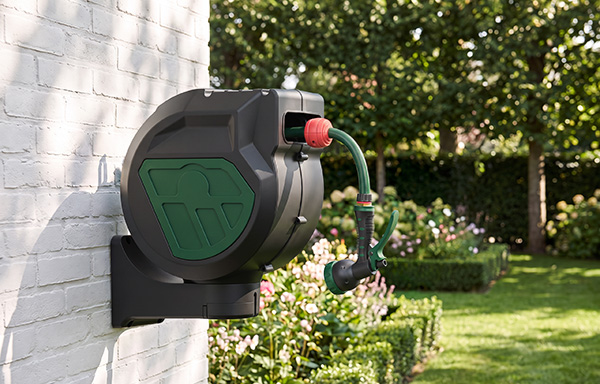
5. Test Hose Extension
An automatic hose reel should not only retract correctly.
It also needs to extend smoothly.
Buyers should check whether:
- the hose pulls out without unusual resistance;
- extension feels consistent;
- the drum rotates smoothly;
- the hose does not visibly jam inside the housing;
- the outlet position does not create excessive friction.
This becomes especially important as hose length and weight increase.
6. Test the Locking Mechanism
The locking system allows the user to keep the hose extended without continuously fighting against spring tension.
During sample evaluation, buyers should check:
- whether the hose locks predictably;
- whether it holds at practical working lengths;
- whether the lock releases correctly;
- whether the user can repeat the action consistently.
A reel that retracts well but does not lock reliably can still create a poor customer experience.
7. Test Automatic Rewind Performance
Automatic rewind is one of the key selling features of a retractable hose reel.
The buyer should therefore check more than whether the hose simply moves back into the housing.
Useful observations include:
- Does the hose begin retracting when expected?
- Is the return smooth?
- Is the speed controlled?
- Does the hose retract completely?
- Does performance remain consistent from different extension lengths?
- Does the hose wind back without obvious jamming?
8. Why Repeat-Cycle Evaluation Matters
A single successful extension and rewind does not tell buyers how the mechanism behaves through repeated use.
Buyers should ask the manufacturer how repeated-use performance is evaluated for the selected product.
The relevant components can include:
- spring system;
- locking components;
- drum;
- hose guide;
- swivel connection;
- mounting structure.
Do not write an arbitrary cycle number into your requirement unless that number has been agreed with the supplier and linked to a defined test method.
9. Check Slow-Retraction Performance
If the selected model includes controlled or slow retraction, buyers should evaluate the return behavior with the final hose specification.
A heavier or longer hose can create a different mechanical load from a shorter configuration.
The objective is not simply to make retraction as slow as possible.
Buyers should look for a practical balance between:
- controlled return;
- complete retraction;
- consistent speed;
- comfortable user operation.
10. Check the Internal Swivel and Rotation
The internal swivel allows water to pass through the reel while the drum and hose system move.
Buyers should consider both:
- water sealing;
- mechanical movement.
This should not be confused with the external 180° wall-mount bracket.
The internal swivel belongs to the water path, while the external bracket allows the complete reel housing to turn toward different working areas.
11. Check the Wall-Mount or Ground-Mount Structure
The mounting system carries the weight of the reel and the forces created when users pull the hose.
For wall-mounted products, buyers should check:
- bracket fit;
- pivot movement;
- mounting hardware;
- housing-to-bracket connection;
- visible looseness or interference.
Ground-stake products require a different evaluation focused on:
- stake structure;
- stability;
- installation condition;
- rotation and pulling direction.
12. Verify Connectors and Accessories
A hose reel can pass mechanical checks and still be unsuitable for the target market if the wrong connectors are installed.
Buyers should verify:
- GHT or BSP configuration;
- connector size;
- connector material;
- quick-connect compatibility;
- spray nozzle;
- tap adapter;
- leader hose;
- mounting hardware.
13. Inspect Housing and Product Appearance
Functional performance is critical, but appearance still matters for retail and private-label products.
Appearance inspection can include:
- housing color;
- surface consistency;
- assembly gaps;
- visible marks;
- logo placement;
- label position;
- accessory appearance;
- general cleanliness.
For custom colors, the approved color reference should be identified before production.
14. Confirm Packaging Before Mass Production
Packaging should be treated as part of the product specification.
Buyers should confirm:
- retail carton artwork;
- product model;
- hose length and diameter shown on the box;
- barcode;
- brand logo;
- instruction manual;
- language;
- included accessories;
- internal protection;
- shipping marks.
A technically correct hose reel can still create a costly problem if the carton contains the wrong specification or market information.
Sample Approval vs Mass-Production Inspection
These are related but different stages.
| Stage | Main Purpose |
|---|---|
| Sample Approval | Confirm the intended product specification before full production. |
| Pre-Production Confirmation | Make sure final components, colors, packaging and documentation are approved. |
| In-Production QC | Monitor whether production continues to follow the approved specification. |
| Finished-Goods Inspection | Check completed products and packaging before shipment. |
Why an Approved Sample Is Important
For an OEM project, the approved sample can become an important reference.
It allows the buyer and manufacturer to compare the intended result against:
- housing appearance;
- hose specification;
- connectors;
- accessories;
- operation;
- labels;
- packaging.
However, the physical sample should also be supported by a written specification.
This reduces ambiguity if several similar models are being produced.
Written Specification + Approved Sample + Packaging Artwork + Inspection Criteria
What Should Buyers Put in a Quality Checklist?
| Inspection Item | Buyer Should Confirm |
|---|---|
| Model | Correct product platform |
| Hose Length | Matches approved specification |
| Hose Diameter | Correct 1/2", 5/8" or agreed size |
| Pressure Specification | Matches agreed model requirement |
| Leakage | No unacceptable leakage through assembled water path |
| Extension | Hose pulls out smoothly |
| Locking | Locks and releases as intended |
| Retraction | Controlled and complete rewind |
| Bracket | Correct fit and movement |
| Connector | Correct standard for target market |
| Accessories | Correct nozzle, adapters and hardware |
| Housing | Correct color and appearance |
| Branding | Logo and labels match approval |
| Packaging | Correct artwork, barcode, manual and protection |
Should Every Hose Reel Use the Same Test Criteria?
No.
A quality checklist should match the final product.
For example, a buyer sourcing a 15m 1/2" residential reel may have different requirements from a buyer sourcing a 40m or 50m product.
Differences may involve:
- hose weight;
- spring load;
- housing size;
- working pressure;
- connector standard;
- mounting structure;
- target application.
Quality control should therefore follow the approved SKU specification, not one generic checklist for every product.
What Should Buyers Ask a Manufacturer About Testing?
Before placing a bulk order, useful questions include:
- How do you verify the final hose specification?
- How is pressure performance checked for this model?
- How is leakage evaluated?
- How are rewind and locking functions checked?
- How is repeated-use performance evaluated?
- How are mounting brackets and accessories inspected?
- How is the approved sample referenced during production?
- What finished-goods checks are performed before shipment?
- What test or inspection documentation can be provided if required?
How to Choose a Retractable Hose Reel Manufacturer: 12 Questions Buyers Should Ask
What Information Should Buyers Provide Before Testing?
A manufacturer cannot build a meaningful test plan around an incomplete RFQ.
Buyers should provide:
- target market;
- hose reel model or application;
- hose length;
- hose diameter;
- pressure requirements;
- connector standard;
- mounting type;
- functional requirements;
- accessories;
- branding;
- packaging;
- any required inspection criteria.
Frequently Asked Questions
What should be tested on a retractable garden hose reel before mass production?
Buyers should confirm the product specification, hose and connector configuration, pressure and leakage performance, rewind and locking operation, mounting system, accessories, appearance, labeling and packaging.
Why is pressure testing important for a garden hose reel?
A hose reel carries water through the hose, connectors and internal water path. Pressure-related verification helps confirm that the selected configuration is suitable for its specified working conditions.
Should buyers test the automatic rewind system?
Yes. Buyers should check hose extension, locking, release, rewind speed, complete retraction and consistency with the final hose length and diameter.
Should buyers check for leakage at the swivel?
Yes. The internal swivel is part of the rotating water path, so it should be included when evaluating the complete assembled reel for leakage.
Should the approved sample be used as a mass-production reference?
For OEM and customized projects, the approved sample and written specification can provide an important reference for the final production configuration.
Should packaging be checked before mass production?
Yes. Buyers should confirm carton artwork, labels, barcode, manuals, accessories and product protection before final packaging approval.
Does every hose reel require the same test specification?
No. Test and inspection requirements should match the final product specification, market, hose length, hose diameter, working pressure, connectors and intended application.
Quality Starts With a Clear Specification
Testing cannot compensate for an unclear product requirement.
Before mass production, the buyer and manufacturer should first agree on exactly what product is being produced.
Once that specification is clear, pressure, leakage, rewind, locking, connectors, mounting and packaging can all be evaluated against the same reference.
This gives buyers a more useful way to manage hose reel quality than judging the product only by appearance or price.
Need to Discuss Quality Requirements for Your Hose Reel Project?
SUNWELL HOSE REELS works with distributors, wholesalers, retailers and private-label buyers on retractable garden hose reel projects for international markets.
Send us your target model, hose length, hose diameter, pressure requirement, connector standard, quantity, customization and inspection requirements so our team can review the project specification with you.
Discuss Quality Requirements